
Golf Swing Tips Every Beginner Should Know
The most useful golf swing tips give you something clear to work on. A comfortable stance, a steady grip, and a balanced finish are good places to start. You don’t need a perfect swing before booking a golf vacation, but a few dependable habits can help you feel more comfortable on an unfamiliar course.
Perhaps you’re joining friends for a long weekend, traveling with your partner, or taking your first golf trip after retirement. Whatever the plan, you’ll want to spend more time enjoying the round and less time wondering what went wrong with your last shot.
Start practicing these six basics before you leave. Then choose courses and a trip schedule that give you room to enjoy learning.
Start With These Simple Golf Swing Tips
1. Get Comfortable Before You Take the Club Back
When a shot goes wrong, it’s tempting to change your swing immediately. First, check how you’re standing. Reaching too far toward the ball or standing too close can make a comfortable swing difficult.
For a middle iron, begin with your feet roughly shoulder-width apart. Bend gently from your hips, soften your knees, and let your arms hang naturally.
Keep your back relaxed rather than forcing it into a stiff position. Your weight should feel balanced through your feet, without leaning heavily toward your toes or heels.
Before each practice shot, check three things:
- Can your arms hang without stretching?
- Do you have room to turn?
- Can you stay balanced while swinging?
Step away after each ball and rebuild your stance. This makes your setup part of your practice instead of something you do once at the start.
Your stance will change slightly with different clubs. First, learn a comfortable iron setup, then ask a coach how to adjust it for your driver and wedges.
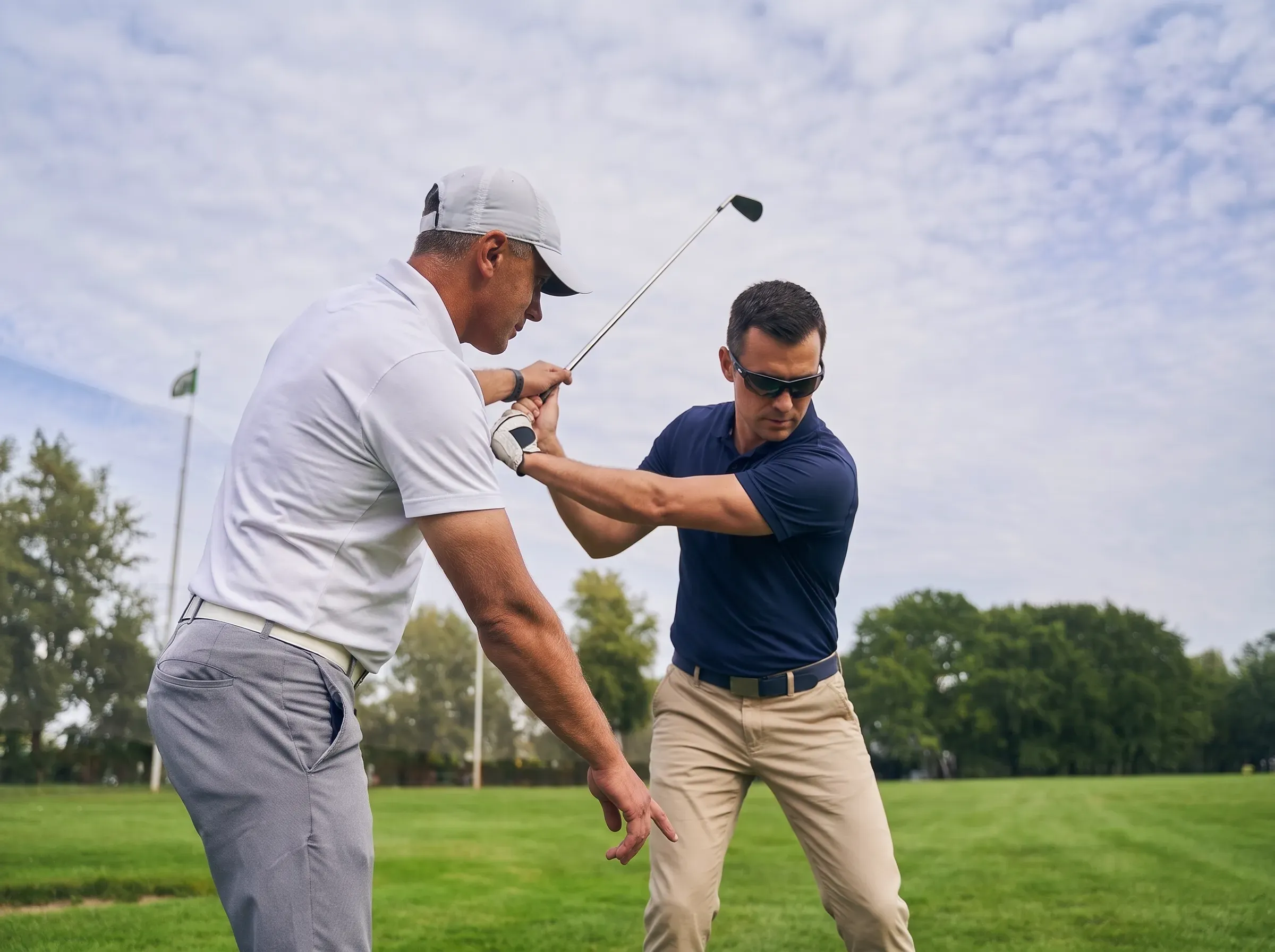
2. Keep Your Grip Secure and Your Arms Relaxed
Your hands are your connection to the club. If they move around between shots, it becomes harder to return the clubface consistently.
For a right handed player, the left hand sits above the right. Left handed players reverse this position. An overlapping, interlocking, or ten finger grip may suit you, depending on your hands and what feels manageable.
The important part is establishing a suitable hand position and repeating it. Learning a proper grip early is also a point emphasized in PGA beginner guidance.
Hold the club firmly enough to control it without making your forearms tense. Between shots, relax your fingers and reset.
Try this during practice: Notice whether you squeeze harder just before starting your swing. If you do, pause, breathe out, and loosen unnecessary tension.
Free golf swing tips can help you understand the basics, but a coach can check your grip in person. That is useful when you’re unsure whether your hands are helping or working against your swing.

3. Choose a Target Before Setting Your Feet
Good contact doesn’t help much if you’re aimed in the wrong direction. Stand behind the ball and choose a clear target. For beginners, a broad landing area is usually more useful than a narrow gap between hazards.
Find a small spot on the ground a few feet ahead of the ball along your intended line. Aim the clubface toward that spot, then arrange your feet approximately parallel to the line.
This order matters. Setting your feet first can leave you trying to adjust the clubface around an awkward position. Titleist’s alignment guidance also uses a routine that establishes clubface direction before settling into the shot.
At the range: Use an alignment stick on the ground, safely outside the hitting area, to check where your feet point.
On the course: Pick a target that leaves room for your usual miss. When playing somewhere new, there is no need to aim directly at every flag.
4. Let Your Swing Build Speed Naturally
Trying to hit the ball harder can make you rush the change from backswing to downswing. You may feel more effort without getting better contact.
Start with a wedge or short iron and make a few half swings. Take the club back comfortably, change direction without pulling, and swing through.
Gradually make the motion longer while keeping the same rhythm. You don’t need to swing slowly. You need enough control to repeat the movement.
A quiet “back, then through” can help. If counting distracts you, leave it out and focus on making one continuous motion.
A useful practice check:
- Hit five balls with comfortable swings.
- Notice your contact and where the balls finish.
- Compare that pattern with five more forceful swings.
Judge the group of shots rather than the longest one. Before you Plan a Golf Trip, spend a few practice sessions building a comfortable rhythm. Keep one familiar swing thought instead of trying several new fixes at once, so you feel more confident when playing an unfamiliar course.

5. Finish Balanced Without Forcing a Pose
Your finish gives you feedback about the swing that came before it. If you repeatedly fall backward, stumble toward the ball, or step sideways, reduce your effort. Check your stance, shorten the swing, and try again.
On a typical full swing from level ground, you should finish supported mainly by your lead leg, with your body turned toward the target. Allow your trailing heel to rise naturally.
Try holding that finish for three seconds. You should feel stable rather than strained. Balance is also a regular focus in PGA practice guidance.
Don’t force your body into a professional golfer’s position. Work within your comfortable range of movement.
This becomes especially useful during a golf vacation. Several rounds, long walks, and travel can leave you tired. If your balance starts slipping late in the day, shorten your swing and choose a manageable shot.

6. Practice Small Swings Before Chasing Distance
A driver can be fun, but it shouldn’t take up your entire practice session. Shorter swings give you a manageable way to work on contact and direction. Take a wedge, select a nearby target, and begin with small swings. Let your arms and chest move together through the shot.
For an iron from a normal fairway lie, aim to contact the ball before brushing the turf. As contact improves, move to half swings and then longer swings. Include chipping and putting, too. You’ll use those skills whenever an approach misses the green.
Keep your practice varied:
- Warm up with short shots.
- Spend time on one swing habit.
- Change clubs and targets.
- Finish with chips and putts.
Golf Apps let you record scores and review your rounds as you put these basics into practice. Choose one that tracks useful details, such as putts or fairways hit. Review those records to spot patterns and decide what deserves more attention during your next practice session.
The best golf swing tips are useful only when they match what you need. If the same problem keeps returning, get individual feedback rather than adding another swing thought.
Plan Your Golf Vacation with Golf Tours AI
Put these golf swing tips into practice, build confidence, and choose courses that suit your ability. A golf vacation gives you time to enjoy the game while exploring somewhere new.
At Golf Tours AI, explore destinations, courses, accommodations, and itinerary options tailored to your preferences. Whether you’re traveling solo, as a couple, or with friends, plan a trip that matches your experience and preferred pace. Share your dates, budget, group size, and playing ability to start planning your custom golf tour.